Shallow vs Deep Earthquakes: What Depth Really Changes
People often focus on magnitude, but depth is a major driver of damage patterns. Two earthquakes with the same magnitude can have dramatically different effects depending on how deep the rupture occurs.
Depth categories (high-level)
Shallow-focus
Intermediate-focus
Deep-focus
(Exact cutoffs can vary by source; what matters is the concept and impact.)
Why shallow earthquakes are often more damaging
Shallow quakes release energy close to the surface, where buildings and infrastructure are. This tends to produce stronger shaking intensity near the epicenter.
Why deep earthquakes can be widely felt
Deep quakes occur far below the surface, so the shaking at the surface may be less intense locally—but seismic waves can travel efficiently through certain rock structures, letting people feel them across wide areas.
Depth + tectonic setting
Deep earthquakes are strongly associated with subduction zones, where a slab sinks into the mantle. That’s why regions near subduction trenches can experience both shallow megaquakes and deeper events.
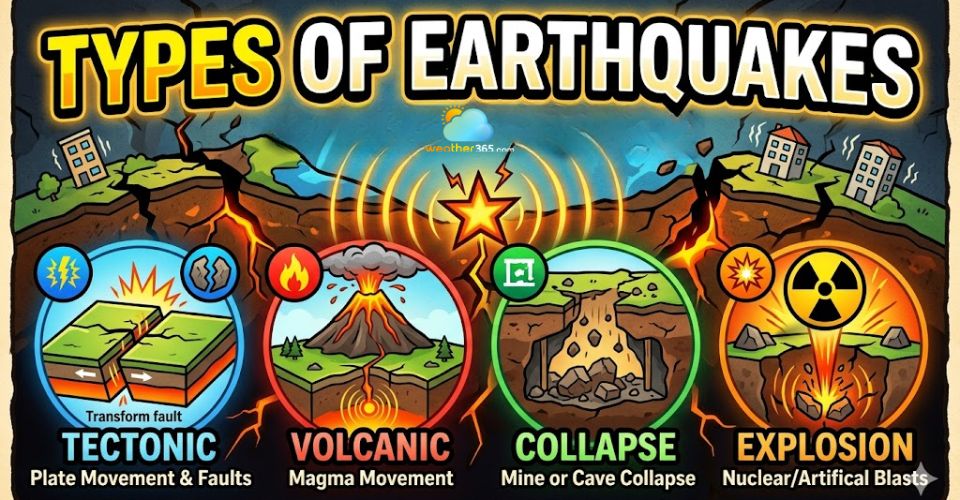
For how depth fits into broader earthquake type classification, this guide is a helpful reference:
Reference:

Comments
Post a Comment